Traditional East Asian medicine evaluates the condition of the body by observing bodily secretions, including nasal discharge, earwax, saliva, sputum, sweat, bowel movements, vaginal discharge, and menstrual blood.
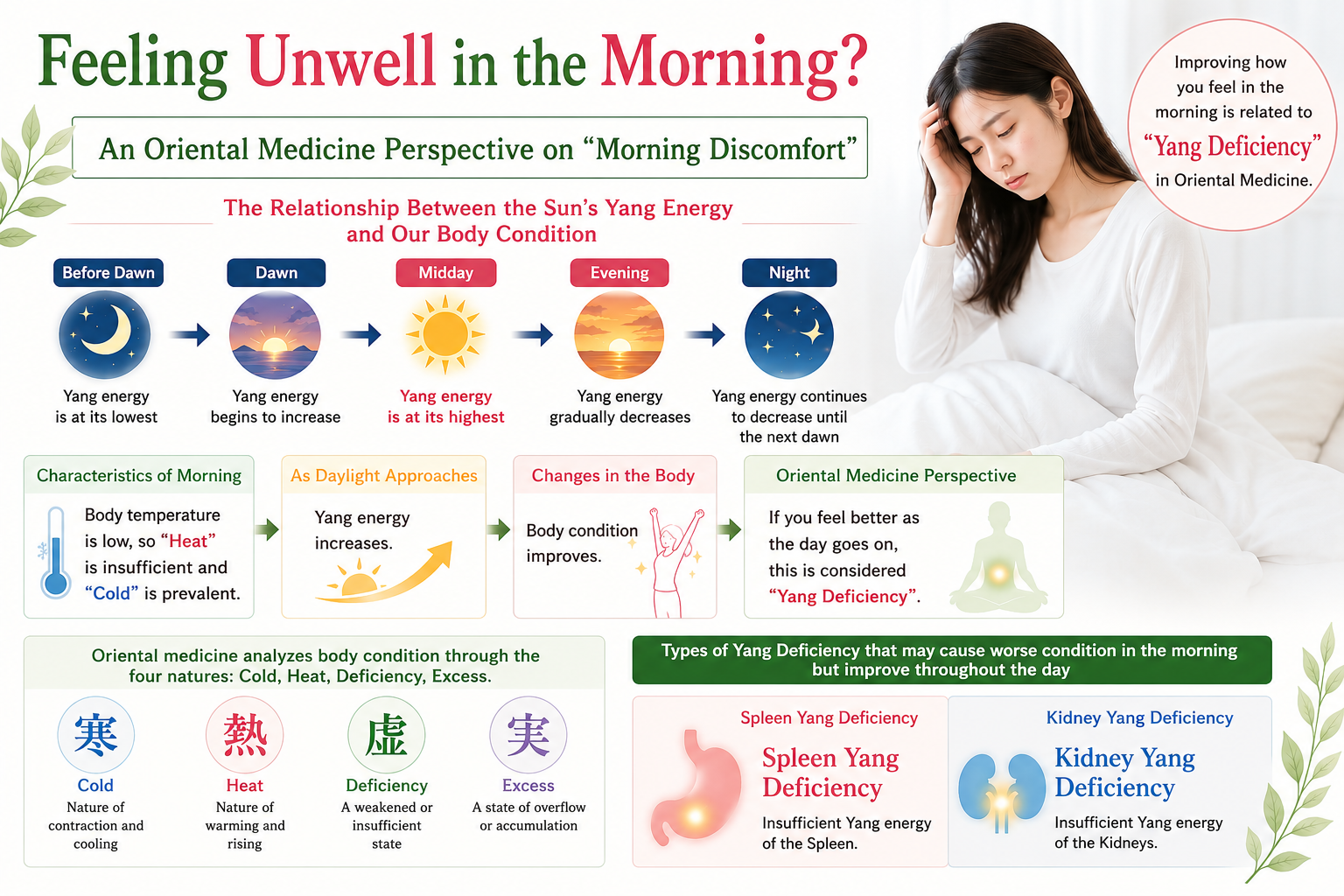
The body’s condition is assessed through four fundamental patterns: Cold, Heat, Deficiency, and Excess.
Cold
Secretions are clear, thin, non-sticky, and have little or no odor.
Heat
Secretions are yellow, sticky, and have a strong odor.
Deficiency
After the secretion is discharged, the body feels tired or exhausted.
This is considered a state in which the body’s vital energy is lost together with the secretion.
Particular attention is required in people with severe physical weakness, such as those in the advanced stages of serious illness or elderly individuals with markedly reduced strength.
Excess
After the secretion is discharged, the body feels more comfortable.
The discharged substance is regarded as a pathogenic excess, and once it leaves the body, symptoms often become lighter and the body feels relieved.
Feeling better after passing gas or vomiting is considered an important guide when deciding the treatment strategy.
In traditional East Asian medicine,
Cold conditions are treated with warming therapy.
Heat conditions are treated according to their nature: excess heat is treated by clearing heat, while deficiency heat is treated by nourishing Yin to reduce heat relatively.
Substances that should be expelled are encouraged to leave the body.
Suppressing their discharge may prolong recovery.