Are You Experiencing These Symptoms?
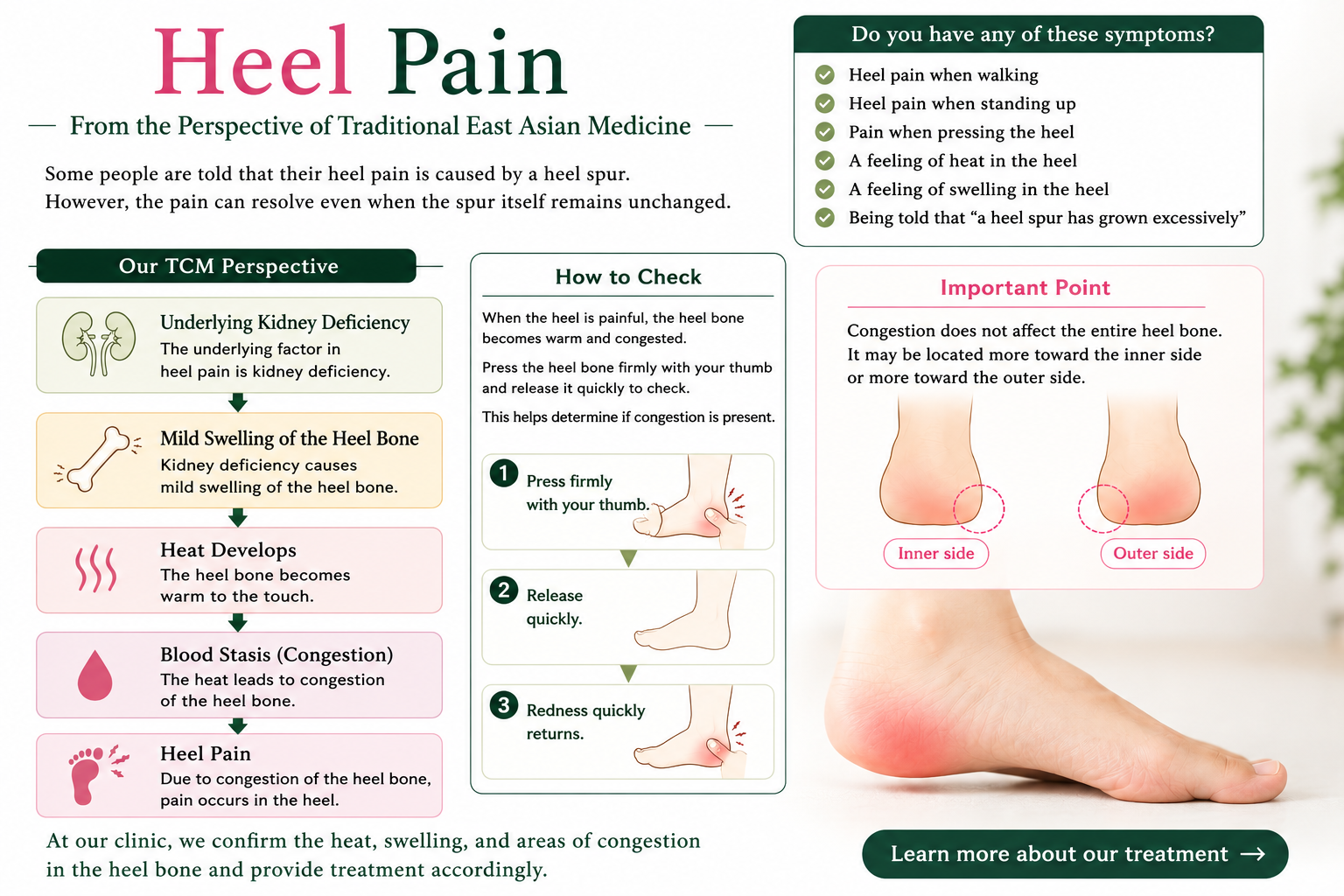
- Heel pain when walking
- Heel pain when standing up
- Pain when pressing the heel
- A feeling of heat in the heel
- A feeling of swelling in the heel
- Being told that a heel spur has grown excessively
Some patients are told that their heel pain is caused by an excessively developed heel spur. However, the pain can resolve even when the heel spur itself remains unchanged.
At our clinic, we consider kidney deficiency to be the underlying condition, causing mild swelling of the heel bone.
Just as the knee can become warm and swollen, a similar condition can occur in the heel bone.
When the heel is painful, the heel bone becomes warm and congested.
This congestion can be checked by pressing firmly and slowly on the heel bone with the thumb and then releasing it quickly.
The redness temporarily disappears from the pressed area. When the thumb is released, the redness quickly returns, indicating congestion.
The congestion does not necessarily affect the entire heel bone.
It may be located closer to the inner side of the heel or closer to the outer side.
At our clinic, treatment is performed while carefully examining the heat, swelling, and location of congestion around the heel bone.